
March 16, 2026
Kimberley Bumhira
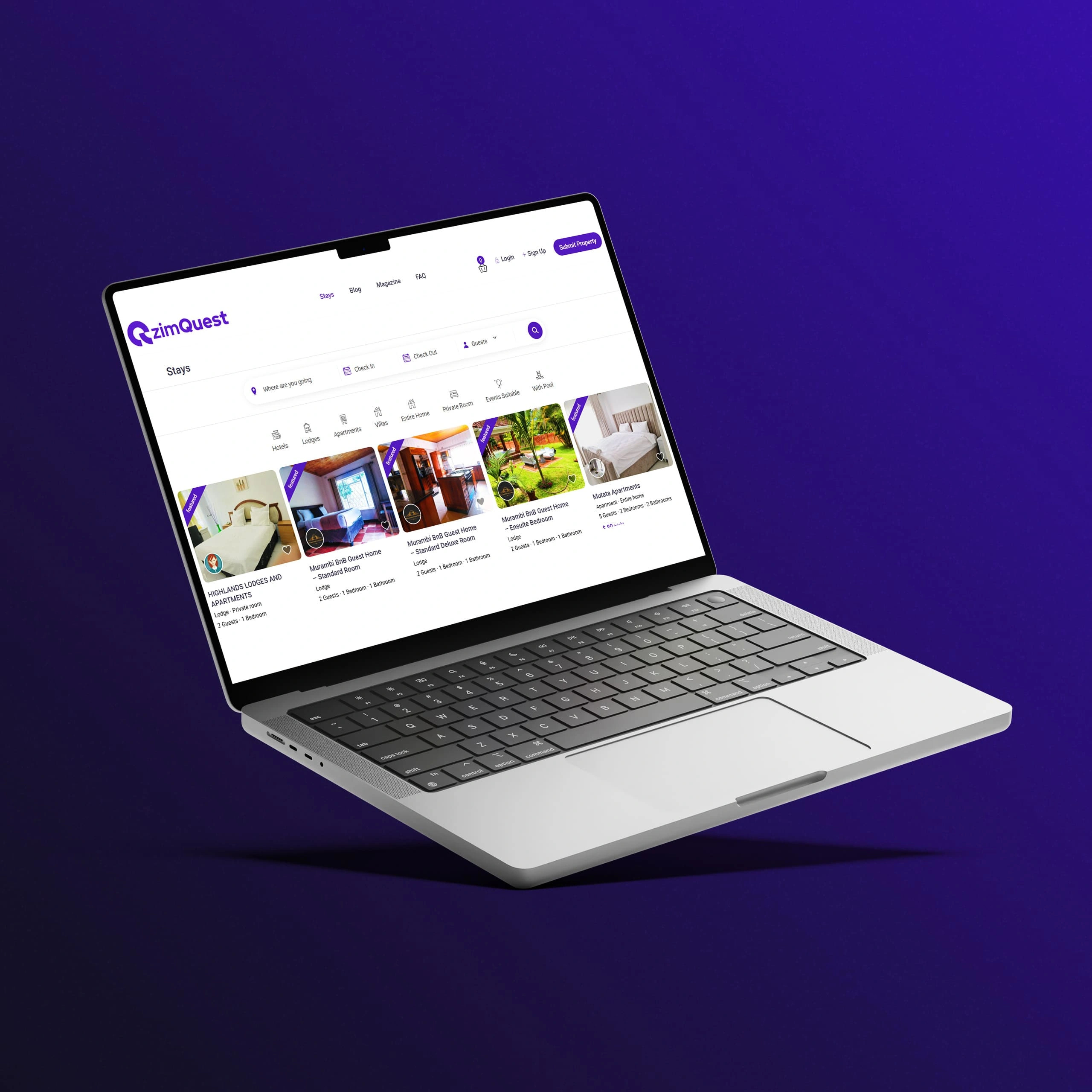
When someone lands on a website, something interesting happens.
They don’t read every word.
They don’t carefully explore every page.
Instead, they make a very fast judgment.
Research in user experience consistently shows that visitors form an opinion about a website in roughly 5–10 seconds. In that short window, they decide whether the site feels relevant, trustworthy, and worth exploring further.
This moment is often referred to as the 10-second test.
And it explains why some websites keep visitors engaged while others lose them almost immediately.
When users arrive on a page, their brain is scanning for answers to three simple questions:
1. What is this website about?
2. Is it relevant to me?
3. What should I do next?
If those answers are not clear quickly, visitors usually leave.
This behavior isn’t impatience , it’s simply how people process information online. The internet provides endless alternatives, so users quickly move on if a page doesn’t immediately feel useful.
Studies on web usability have shown that users rarely read webpages word for word.
Instead, they scan for signals.
These signals include:
headlines
subheadings
images
buttons
highlighted phrases
Eye-tracking research even shows that people often follow what’s called an F-pattern, scanning across the top of a page and then moving down quickly.
This means that the structure of a page matters just as much as the content itself.
Websites that perform well tend to communicate three things very clearly as soon as someone arrives on the page.
The value proposition explains what the company does and why it matters.
Unfortunately, many websites rely on vague or generic statements such as:
“We provide innovative solutions for modern businesses.”
While this may sound impressive, it does not provide clear information.
A stronger value proposition explains the offering in a straightforward way. For example:
“Custom software built to streamline business operations.”
“Marketing strategies designed for growing startups.”
“Digital tools that help teams automate repetitive work.”
Clarity helps visitors quickly understand whether the website is relevant to their needs.
When the message is specific, visitors can immediately determine whether they should continue exploring.
Visual hierarchy refers to how information is organized so that the most important elements stand out.
Effective websites guide the visitor’s attention naturally through design.
This can be achieved through:
larger headlines
clear spacing between sections
contrasting colors for buttons
structured layouts that separate information logically
Without visual hierarchy, a website can feel cluttered and difficult to understand. When everything on a page looks equally important, users struggle to identify where they should focus their attention.
A strong hierarchy helps visitors move smoothly through the content and quickly grasp key information.
Many websites fail the 10-second test simply because they don’t tell visitors what to do next.
Imagine arriving on a page that explains a service but provides no clear action. The visitor may understand the offering but still feel uncertain about the next step.
Effective websites guide users through clear calls to action, such as:
“Book a consultation”
“View our services”
“Start a free trial”
“Download the guide”
These prompts help transform curiosity into engagement.
Even subtle changes in how calls to action are presented can significantly influence user behavior.
Speed is another critical factor during the first few seconds of a visit.
If a page loads slowly, visitors may leave before they even see the content.
Research has consistently shown that delays in loading time reduce user satisfaction. Even small delays can increase the likelihood that visitors abandon a page.
Several factors influence website speed, including:
image file sizes
server performance
inefficient code
excessive scripts
lack of caching
Optimizing these elements helps ensure that users experience the content quickly and smoothly.
In many cases, improving website speed can significantly improve both user engagement and search engine rankings.
Interestingly, the perception of a website is not determined solely by its content. Visual design also plays a powerful role in shaping how visitors interpret a page.
People naturally associate certain design qualities with credibility.
For example:
clean layouts feel more professional
consistent typography improves readability
high-quality images enhance trust
organized navigation suggests reliability
When design feels chaotic or outdated, visitors may subconsciously question the credibility of the business behind the website.
This is why user experience design has become such an important field within digital product development.
Search engines aim to deliver results that satisfy users.
One way they evaluate satisfaction is by observing how visitors interact with websites.
If users frequently leave a page immediately after arriving, search engines may interpret this as a signal that the content did not meet expectations.
On the other hand, when visitors stay on a page, explore additional sections, or interact with content, this behavior suggests that the website provides value.
While many factors influence search rankings, user engagement is increasingly important.
Websites that successfully capture attention and encourage exploration often perform better in search results over time.
Testing whether a website passes the 10-second test can be surprisingly straightforward.
One approach is to ask someone who has never seen the website before to look at the homepage briefly.
After about ten seconds, ask them three questions:
What does this company do?
Who is the website for?
What action could you take on this page?
If the answers are unclear, it may indicate that the messaging, layout, or structure needs improvement.
Even small adjustments , such as rewriting a headline or simplifying navigation , can dramatically improve clarity.
Understanding how users interact with websites is only the first step. The real value comes from building platforms that are designed with both user behavior and performance in mind.
At Rapportech, the focus is on developing websites that do more than simply exist online , they are built to communicate clearly, support business goals, and create meaningful digital experiences. From modern website design to scalable web development, the right website can become one of the most powerful tools a business owns.
WhatsApp us